

Lower back pain (Lumbago)
Rehab training for lower back pain
Rehab 1 acute – Rehab 2 after acute period
 Description of the lower back pain
Lumbago is terminology meaning pain in the lumbar part of the back (lower) which can have multiple causes. Lumbago is characterized by having no radiating pain beyond the seat area, however radiating pain the buttock is not necessarily experienced. If you experience backache with radiating pain down the legs and / or sudden changes in urination and stools, seek medical help immediately. The typical causes of lumbago are:
- Increased tension in the muscles of the lower back.
- Locking in a facet joint in the lower back.
- Tight ligaments in the lumbar area.
Lumbar pain is pain the lower back and can be divided into acute and prolonged (“chronic”) pain. The acute back pain has a duration of less than 6 weeks, while the long-term (“chronic”) back pain has a duration over 12 weeks. Acute lumbago affects primarily persons aged 25-40 years and is seen rarely in people over 50 years of age.
Often the therapist performs some tests to eliminate suspicions of prolapsed disc. Lumbago is a broad term referring to a condition where facet joints, muscles and ligaments are affected, and is now a days known to be a widespread disease. It is estimated that more than 80% of the population, at one time or another, suffers from lumbago.
The most important prevention to avoid lumbago is building optimal mobility and stability of the body, and never doing careless movements, even in situations where only a small insignificant item needs to be picked up from the floor. Keep your body in motion daily, avoid unhealthy lifting by building a correct lifting technique via. deadlift, squat or lunges.
Symptoms of lower back pain
- The pain often occurs suddenly in the event of a heavy lift or fast turning of the body, but may also occur without prior effort.
- The condition resembles neck disorders where the joints or nerves are irritated and the muscles protect the area by making a reflective contraction.
- The pain is usually located in the lumbar part and does not radiate into the legs (remember radiating may be a sign of a prolapsed disc).
- Stiffness in the lower back.
- Functional scoliosis due to muscle tension, which prevents the normal mobility of the back which triggers the pain.
- Reduced mobility.
Examination and diagnosis of lower back pain
It is always a good idea to consult a therapist who can check if you have lumbago. The main task of the therapist is to find out if you have a prolapsed disc, or “just” a lumbago. Lumbago is harmless, and most people get better fast, although it can hurt extremely. It is estimated that less than 10% go to their own doctor initially, but instead try to rest or seek alternative treatment. A physiotherapist, osteopathist, chiropractor, sports injury therapist can easily investigate whether the pain is caused by lumbago.
Treatment of lower back pain
Roughly speaking, you can divide the lumbago treatment, whether it is acute or chronic. Whichever condition you have, studies have shown that bed rest and immobility highly delays betterment. The vast majority will be back to normal within the first two weeks if they stay active and do mobilizing back exercises. See rehab training of the injury.
Acute lumbago (0-48 hours)
In cases of acute lumbago you must rest for the first 48 hours, and only make small moving exercises Rehab 1 acute. A couple of times a day you can do cold / heat treatment (cryo- / thermotherapy). Where you lay on an ice bag for 9 minutes, then a warm pillow for 15 minutes. You can also take a cure of some homeopathic muscle relaxant medicine, Spascupreel. These are tablets which should be dissolved in your mouth and support your own body in making the hormones that make the muscles relax. There are no known side effects on the product.
Subacute lumbago (day 3-100)
- Rehab 2 after an acute period.
- Massage to get the stressed muscles to relax.
- Cryotherapy / Termo therapy.
- Chiropractic treatment.
- Physiotherapy treatment.
- TENS.
- Ultrasound (continuous / pulsating), 3 Mhz, 2 W cm2.
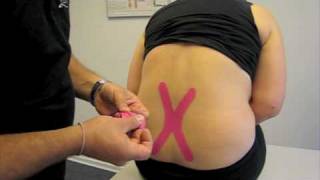
- Kinesiology tape.
- Spascupreel (2 tabl. 3 g. daiy for 8 days).
If you have received 4-5 treatments or 14 days have passed without improvement, consult a doctor. The doctor may then provide analgesic or muscle relaxant medicine. X-ray the lumbar spine for chronic pain or conduct a blood test for the examination of other diseases.
Social Medier